When people search for keyless digital storage unit locks, they’re not just exploring tech.
They’re looking for trusted secure storage and protection that goes beyond a basic padlock and a promise. Across the Midlands, expectations are shifting.
Security now means control, visibility and accountability.
At Smartbox Self Storage UK, security is built as a system. Traditional storage relied on a padlock and personal key management, supported by gates and CCTV. Keyless digital storage unit locks change that model. Access becomes permission-based, app-controlled and monitored. It reduces risks linked to lost keys or copied locks.
In Leicester, Corby, Kettering, Northampton, Huntingdon and Peterborough, customers are comparing more than price and square footage. They’re comparing standards. The lock is no longer just hardware; it’s central to delivering genuinely trusted secure storage.
Why Self Storage Security Matters More Than Ever
Self storage security isn’t just about deterring theft. It’s about confidence and predictability. People store a wider mix of items now: business stock, tools, archived paperwork, electronics, sports equipment, or furniture in transit during a move. Some of those things are easily replaced; others aren’t. In that context, secure storage units mean more than a camera on a wall.
Security is also increasingly about access control. Storage is often shared: partners both need entry, a family member might drop items off, or a small business might need staff access. Traditional lock-and-key arrangements can cope, but they push responsibility onto physical key sharing, which is where security can quietly degrade over time.
That’s why customers have started asking better questions. They want to know how to secure a storage unit properly, what kind of storage unit lock is best, and whether it’s possible to tighten control without turning storage into an admin job.
What Are Padlocks and How Are They Used in Self Storage?
Padlocks are the classic solution because they’re simple and familiar. The principle is straightforward: the unit door closes, the latch holds, and the padlock is the final barrier.
Many people like that clarity. It feels private: one key, one owner, one lock.
The catch is that not every padlock is fit for storage. When people search “best padlock for self-storage” or “best lock for a storage unit”, they’re usually trying to avoid two common mistakes. The first is using a light-duty padlock with an exposed shackle. The second is choosing a lock that doesn’t sit properly on the storage unit door lock hardware, leaving extra space and leverage.
In storage, small design differences have outsized consequences.
That’s why storage-focused locks tend to be recommended. A disc lock for a storage unit is popular because it minimises exposed shackle area. A shrouded padlock for storage is another option, designed so the shackle is protected by the lock body. Both aim to make the lock harder to grip, cut or manipulate
Padlocks also come with a hidden operational cost: key control.
Keys get lost, copied, and casually shared. Over time, “one key” can become several keys in circulation, especially when access is shared across family members or colleagues. That doesn’t make padlocks unsafe; it means they rely on disciplined key management.
What About Drive-Up Containers? The Role of a Lock Box
Drive-up container storage introduces a different security reality.
The container itself is strong, but the obvious target is often the door hardware and the padlock that secures the locking bars. A basic padlock can be a minor delay if the shackle is exposed, because that’s the part tools tend to go for first.
A container lock box, sometimes called a lock cowl, is a steel housing fixed over the locking area to surround the padlock and shield the shackle from attack. It doesn’t replace a good lock; it makes a good lock harder to reach, increasing the time, noise and effort needed to force entry.
This matters because container storage is sold on convenience. People like being able to drive up, open the doors, load, and go. A lock box strengthens the vulnerable point without changing how the unit is used.
What Are Keyless Digital Locks and How Do They Work?
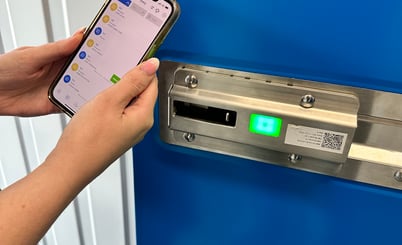
Keyless digital locks replace physical keys with digital permissions. In most cases, you unlock via an app on your phone — a smartphone access storage unit journey rather than a key-and-padlock routine. Instead of thinking “who has the key?”, you think “who has access right now?”
Nokē Smart Entry is one well-known example of this approach in self storage. Put simply, it’s a smart entry system that enables access through a mobile app. When a facility uses a system like this, the lock becomes part of storage unit access control rather than a standalone object you buy yourself.
For customers, the day-to-day benefit is usually reduced friction. You don’t need to keep a key on a keyring, and you can often manage access through your account. If you need to share entry, digital key sharing can be cleaner than handing over a physical key and hoping it comes back. Many systems can also provide an access log or access history, creating a record of when the unit was opened.
Some smart lock setups can also support optional monitoring features depending on configuration. The point isn’t to add complexity; it’s to give customers more control and visibility than a padlock alone can offer.
Comparing Padlocks vs Keyless Access: Security, Access, Management
The quickest way to compare padlocks and keyless systems is to look at what each one is designed to do.
A padlock is a physical barrier.
If you choose a storage-appropriate lock, it can provide strong resistance at the unit door, and it will work without apps, batteries or accounts. The weak points tend to be the lock choice and the way it’s exposed. An ordinary padlock with a visible shackle is easier to attack than a disc lock for a storage unit or a shrouded padlock for storage, because there is simply more metal available for tools to grip. On drive-up container units, that exposure matters even more, which is why shielding the lock with a lock box is such a practical upgrade.
Keyless digital locks for storage are built around access control.
Instead of managing a key, you manage permissions, usually through a phone-based system. The security benefit is not only “the unit is locked”, but “access can be controlled and, where enabled, recorded”. For people who share access with family or staff, permission-based entry is often more manageable than circulating keys, particularly over longer rental periods.
Convenience is the second dividing line. If you access frequently, the friction of keys, lock handling, and fixed office hours can add up. A keyless entry self-storage setup can reduce that day-to-day hassle, especially where the facility supports 24/7 entry, and you want storage to fit around your schedule rather than the other way round.
Management is the final difference. A padlock forces sharing through a physical key, which can be hard to track. A digital system is designed for digital key sharing and faster changes when circumstances shift. The trade-off is technological dependency: a keyless system asks you to rely on your phone and the facility’s access platform being well maintained.
Why Smartbox Self Storage Uses Nokē: Features and Benefits
Smartbox Self Storage UK positions itself as a strong and growing Midlands operator, and its sites are built around a modern, low-friction customer journey. Where Smartbox Self Storage UK uses Nokē Smart Entry, access is managed digitally, reducing reliance on keys and supporting a controlled, permission-based approach to entry.
Smartbox Self Storage UK isn’t a single-format operator.
On drive-up outdoor container units where Nokē isn’t used, the emphasis shifts to physical hardening at the locking point, using lock boxes to protect the padlock area on the container doors. That matters because the exposed shackle is often the vulnerable part of a basic container locking setup, and shielding it changes the practical difficulty of an attack.
For customers, the benefit is that the security approach matches the unit type. Indoor units can lean into an app-controlled lock model and managed permissions. Outdoor containers can lean into robust padlocks paired with lock box protection, keeping drive-up convenience without leaving the lock exposed.
Keyless storage is appearing in more places, but it tends to be most visible at operators building around automation and convenience rather than traditional office-led processes.
If you are comparing providers, focus on what you’ll experience. How do you access the site? How do you access the unit? Is access genuinely available when you need it? How is shared access handled? If a provider is vague on those points, the uncertainty tends to land on you later.
Choosing the Right Lock Type for Your Storage Needs
If you want a quick decision rule, start with how you’ll use the unit.
If you’ll access rarely and you don’t need shared entry, a high-quality padlock can be the simplest option. In that scenario, the best lock for a storage unit is usually one designed for storage doors and chosen to minimise exposed shackle, because that’s where many basic locks are most vulnerable.
If you’re choosing drive-up outdoor container storage, the same logic applies but the environment matters. Containers are convenient because you can load directly, but the locking point is also more exposed, which is why combining a robust lock with a lock box is often the most straightforward way to harden the vulnerable area without changing how you use the unit.
If you’ll visit frequently, have irregular hours, or expect to share access, keyless access usually fits better. Permission-based entry reduces the admin of keys and can be easier to manage over time, particularly for business storage security where staff access may change, and you want the storage unit to function smoothly as part of operations.
The aim is to match the security model to your routine: physical hardening when the job is simply to keep a door shut, and access control when the job is to manage who gets in and when.
Finally…
Lock choice can look like a small detail, but it shapes the entire storage experience. If you want maximum simplicity and you rarely visit, a well-chosen padlock can do the job — especially when paired with physical protection like a lock box on container doors. If you value access control, shared entry and day-to-day convenience, keyless systems used at Smartbox Self Storage on applicable unit types can make storage feel less like an obligation and more like a service that fits modern life.